Quick Summary
- Application: Polymer-modified asphalt (PMA) dispersion and morphology check
- Equipo: Dino-Lite Handheld Fluorescence Microscope & RK-10 Stand
- Magnification: 20x – 220x
- Key Outcome: Clear high-contrast visualization of fluorescent polymer networks against dark asphalt matrix without heavy benchtop lab scopes.
Evaluating polymer dispersion in modified asphalt binders typically requires fluorescence imaging to distinguish the polymer from the bitumen matrix. While we are microscope specialists rather than pavement engineers, we love testing real-world samples to see how our handheld units handle tricky materials.
Our technical team recently put some polymer-modified asphalt samples under a Dino-Lite fluorescence scope to see what kind of clarity and contrast we could get. Here is a quick look at the setup and the resulting images.
Inspection Setup
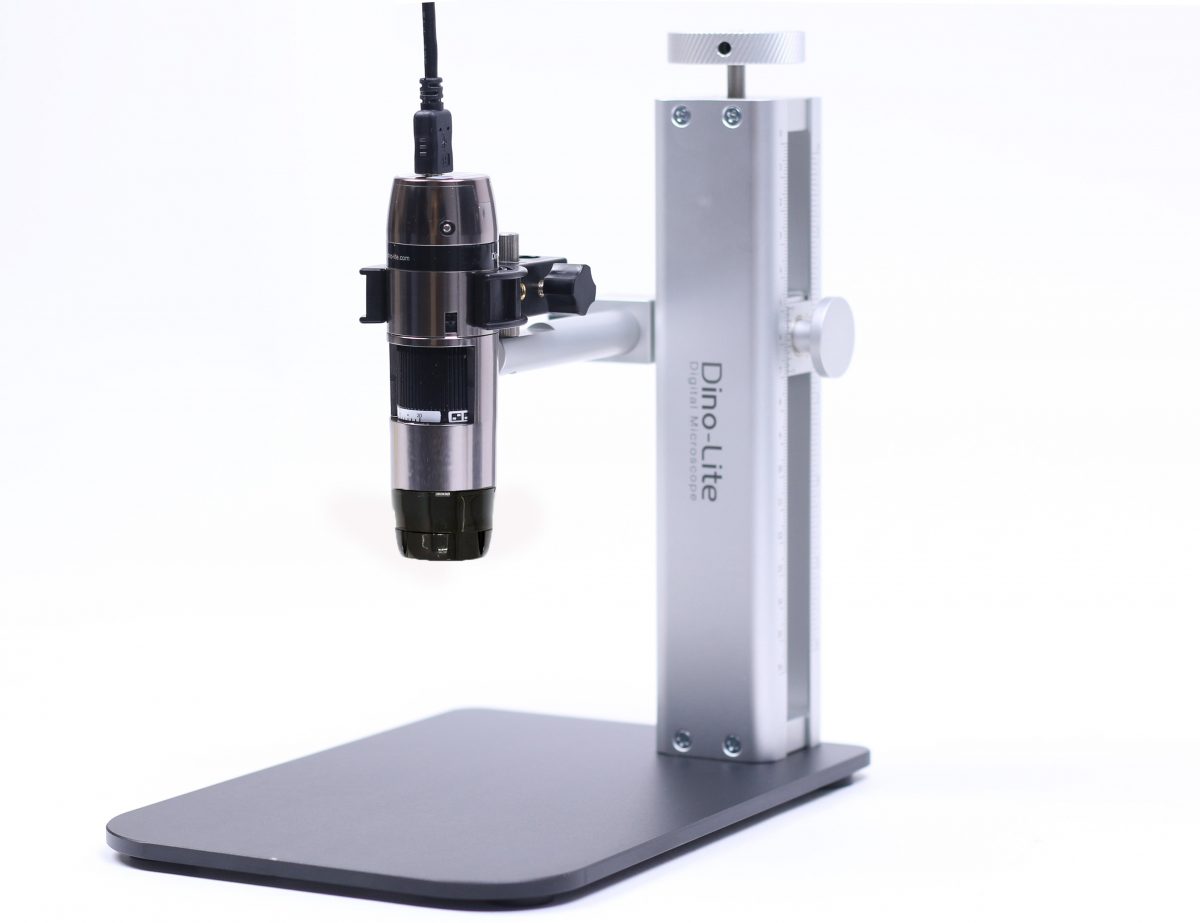
- Equipo: AM4517MT-G2FBW Dino-Lite Handheld Fluorescence Microscope
- LED Configuration: λ peak: 465 nm (7 LEDs), White (1 LED)
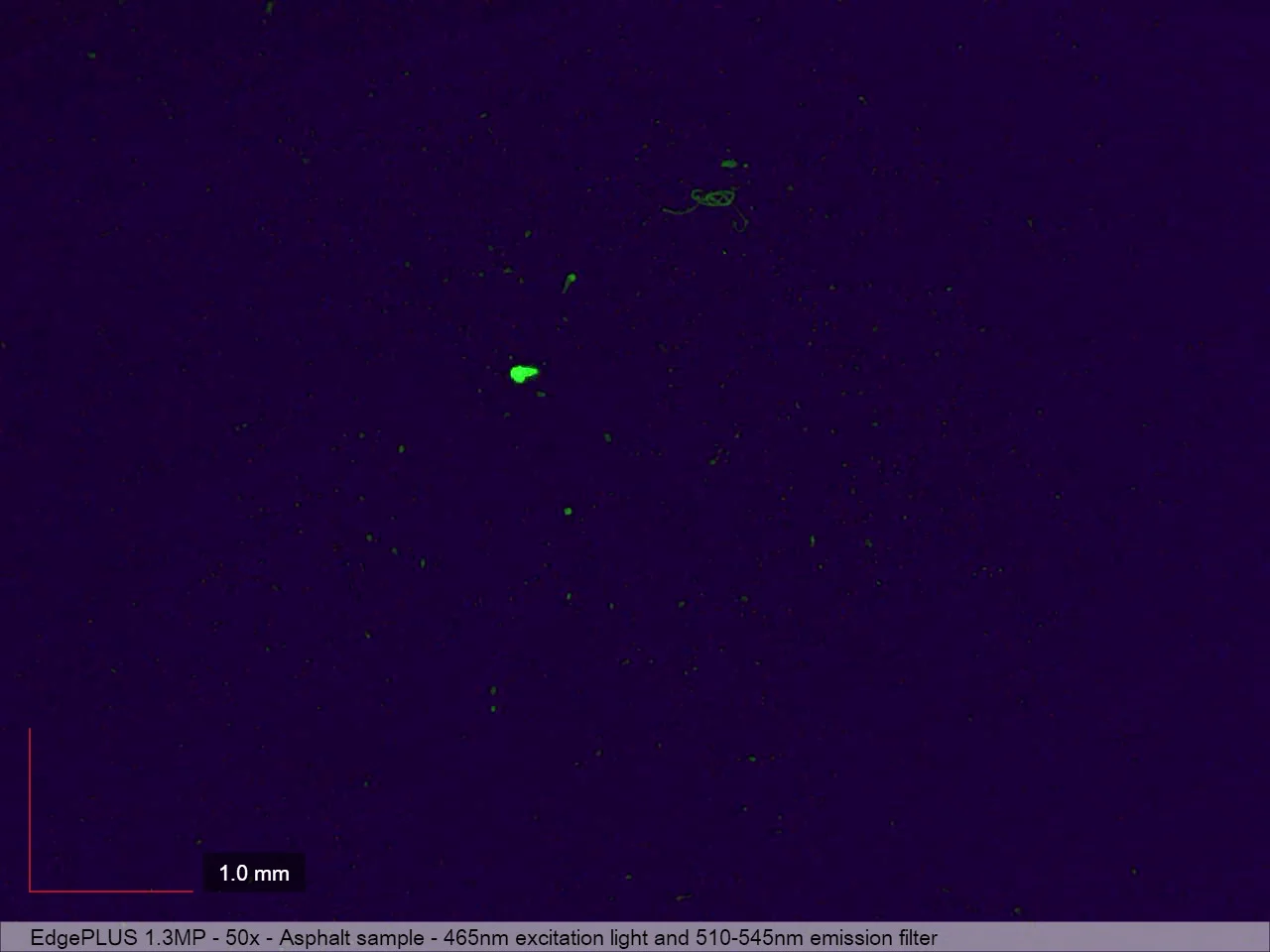
- 465nm excitation light and 510-545nm emission filter
- Magnification: 20x – 220x
- Stand: Dino-Lite RK-10 Precision Stand
Image Results
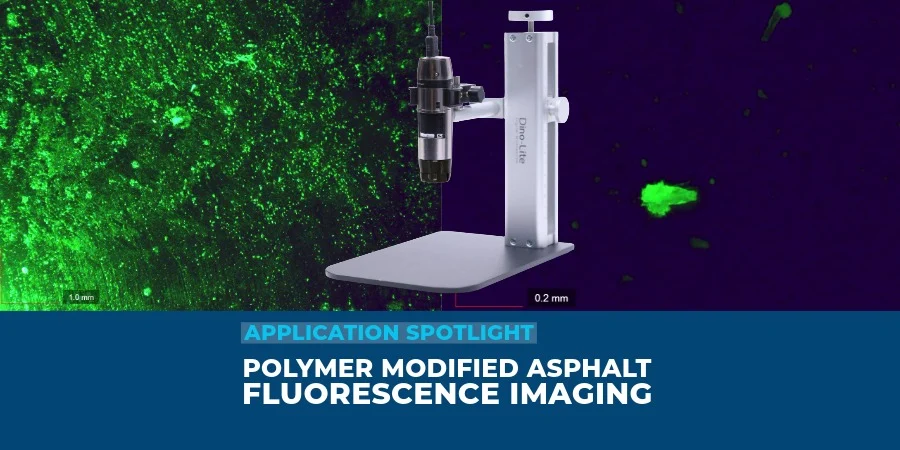
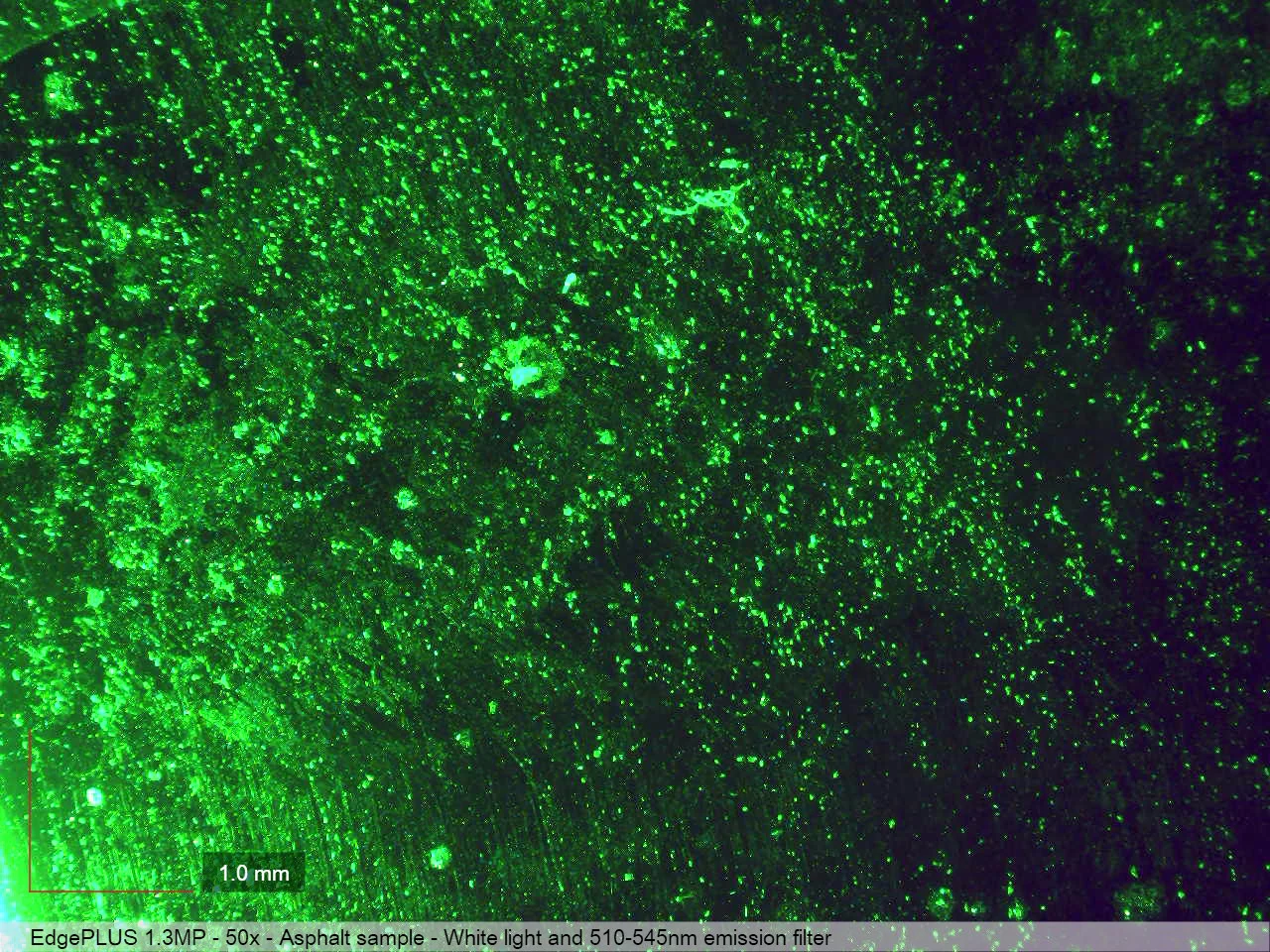
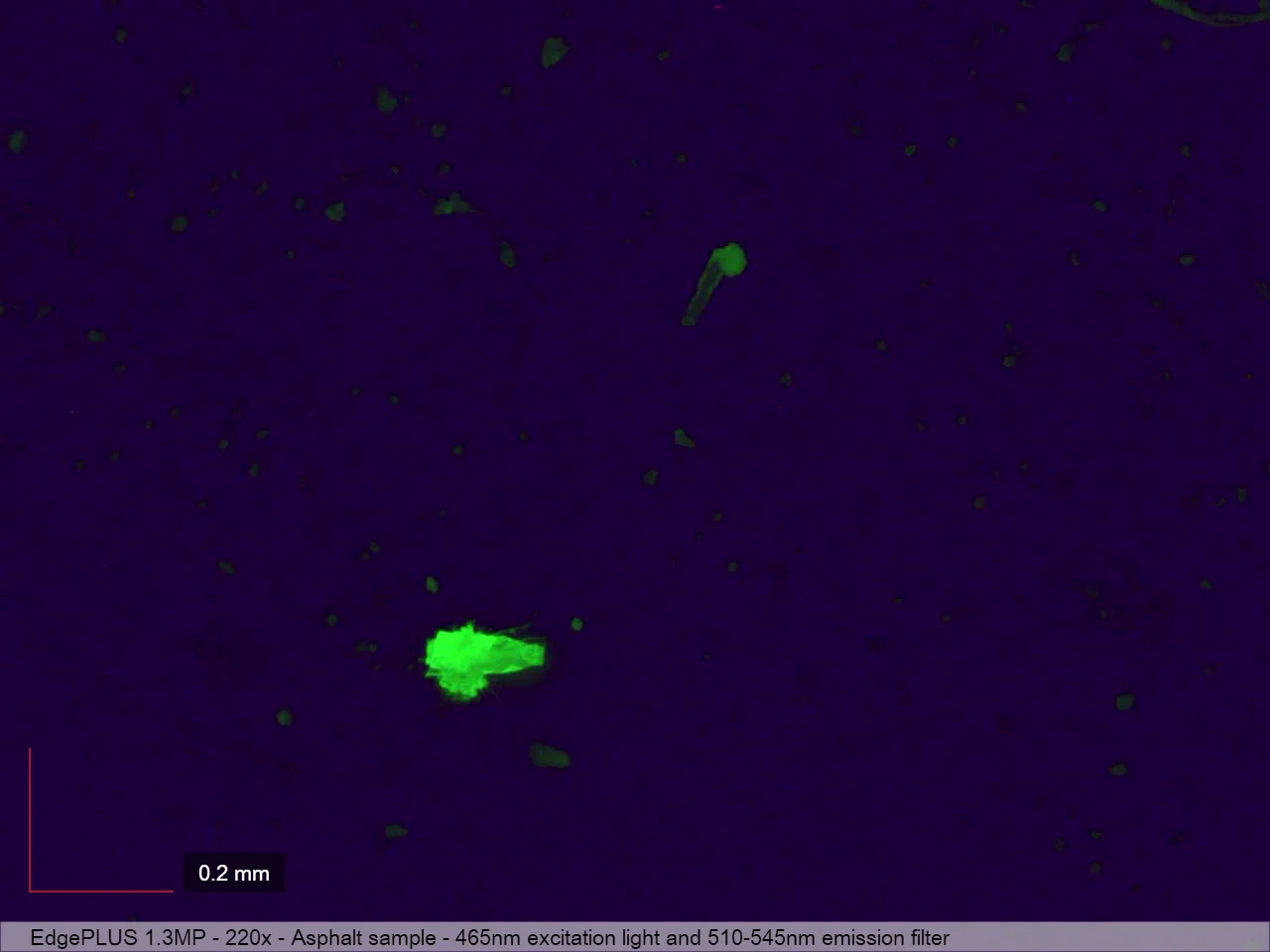
Under excitation lighting, the polymer phase fluoresces brightly against the darker asphalt background. As shown in the captures below, the scope easily picks up:
- Clear visual contrast between the glowing polymer and the surrounding matrix.
- Detailed views of dispersion patterns at magnifications up to 220x.
- Micro-scale details suitable for fast visual checks or capturing images for reports.
We’ll leave the detailed material analysis to the asphalt pros, but these test shots demonstrate that a compact, portable Dino-Lite can clearly capture the fluorescent details you need.
Test Your Own Samples
Curious to see how your specific compounds, modified binders, or fluorescent materials look under a Dino-Lite? Contact our team to schedule a live web demonstration or arrange to send in a sample for testing.