We love hearing how Dino-Lite microscopes help researchers make discoveries that might otherwise remain hidden. Recently, Dr. Jon Shenker, Professor Emeritus of Marine Biology, Fisheries, and Aquaculture at the Florida Institute of Technology, shared stunning images and videos from his fieldwork—and the incredible story behind them.
For Dr. Shenker, his Dino-Lite digital microscope is more than just lab equipment—it’s a constant companion. “My Dino-Lite is my absolute favorite field instrument, and gets carried everywhere,” he says. From the decks of research ships to aquaculture labs, and even to an abandoned cinder block shed on a deserted Bahamian islet powered by a 12-volt car battery, Dino-Lite has helped capture critical data in challenging environments.

The Bonefish Spawning Project
Most of the imagery Dr. Shenker shared comes from the Bonefish Spawning Project—a collaborative research effort supported by the Bonefish and Tarpon Trust, the National Fish and Wildlife Foundation, Harbor Branch Oceanographic Institute, Fisheries Research Foundation, Bair’s Lodge, and many dedicated scientists and students. Drs. Jon Shenker, Aaron Adams, and Paul Wills served as project directors.


The team’s mission was to identify bonefish spawning sites, follow their migration patterns, and study larval development. Their research revealed that bonefish—normally found in shallow flats just 1–2 meters deep—can migrate up to 100 km to pre-spawning aggregation sites at the edge of deep water. Around the full moon in late fall to early spring, massive schools form. On one or two nights, they head offshore, descend to depths of 150 meters, mature their eggs, and rush to the surface to spawn in a spectacular display.
Real-Time Imagery and Assessment in the Field
Using Dino-Lite, Dr. Shenker could quickly assess the reproductive status of captured fish—right on location. In makeshift setups, sometimes balancing the scope on cinder blocks and running it off a car battery, he was able to image and measure developing eggs in real time. These images guided decisions about which fish to bring back for spawning studies.
In controlled environments on research vessels, beaches, and labs, the team successfully administered hormones to induce final egg maturation, manually stripped gametes and fertilized eggs, and monitored their development. Dino-Lite allowed Dr. Shenker to capture high-resolution images and videos of live embryos and planktonic larvae, rapidly collecting morphometric measurements – and preserving their natural colors that would otherwise be lost during preservation.
One of his most memorable moments? Filming bonefish embryos hatching at 3 a.m. on a ship’s deck. “My hatching video wins the prize as the smallest bonefish ever caught,” he joked.
Science in Action
The data collected with Dino-Lite has contributed directly to 5–6 published research papers, with many more building on these findings. This work is expanding our understanding of bonefish biology, larval survival, and fisheries management.
For Dr. Shenker, portability and reliability are key. “I can take my Dino-Lite anywhere—on boats, into aquaculture labs, and into remote field locations,” he says. And in every setting, it helps turn fleeting moments of discovery into lasting scientific insights.
See the Research Up Close
Dr. Shenker’s work highlights not only the portability of Dino-Lite, but also the precision it offers when paired with the right accessories. Using the Dino-Lite Edge microscope with the BL-CDW backlight stage, he was able to switch seamlessly between darkfield and brightfield illumination—perfect for imaging delicate fish eggs, embryos, and plankton in vivid detail.


- Provided images and video were captured using Dino-Lite AM4815ZT (1.3MP) and BL-CDW for darkfield/brightfield illumination.
Above, you can explore a selection of images and videos from the Bonefish Spawning Project. The gallery below includes various images by contributing students from Belize, Cuba, Florida Keys and the Gulf of Mexico. Captured everywhere from ship decks to remote island shacks, they showcase the incredible reproductive journey of bonefish—and the role Dino-Lite technology plays in bringing these hidden processes into view. For readers who would like to dive deeper into the science, we’ve also linked several of the published research papers at the end of this article that resulted directly from this work.


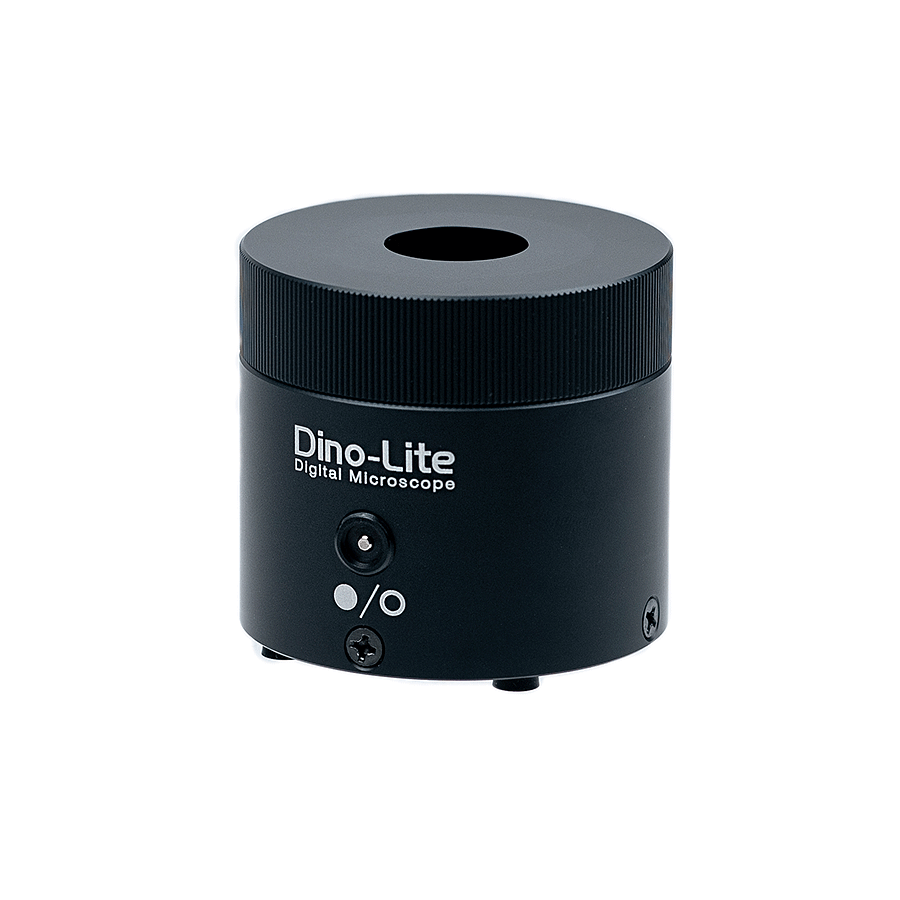
Featured in this post is the BL-CDW backlight stage providing bright field and dark field illumination for use with Dino-Lite handheld microscopes.
Related research papers
- Behavioral observations of bonefish (Albula vulpes) during prespawning aggregations in the Bahamas
- Identifying pre-spawning aggregation sites for bonefish (Albula vulpes) in the Bahamas to inform habitat protection and species conservation
- Lipid Composition and Utilization in Early Stage Leptocephalus Larvae of Bonefish (Albula vulpes)
- Biophysical larval dispersal models of observed bonefish (Albula vulpes) spawning events in Abaco, The Bahamas
- Induced spawning and embryonic and early larval development of bonefish (Albula vulpes)
Thank you to Dr. Jon Shenker (jmshenker1@gmail.com / shenker@fit.edu) for reaching out and sharing the amazing imagery and accompanying story.